- Sitemap:
- Projects Abroad /
- Volunteer Destinations /
- Cambodia /
- Conservation and Environment /
Diving & Marine Conservation Volunteering in Cambodia

Although Cambodia might not be the first place that comes to mind when thinking of volunteering on a Marine Conservation project, our pioneering conservation and research activities are at the forefront of protecting and researching Cambodia’s diverse marine environment. Located on the tropical Gulf of Thailand Cambodia has pristine uninhabited islands and over 400km of coastline. The project is the first of its kind in Cambodia and supplies the Cambodian Fisheries administration with much needed data to help in their marine conservation efforts.
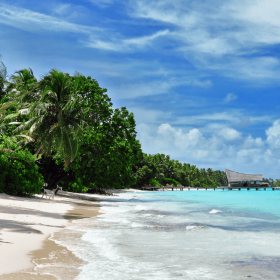
The Conservation Project base is situated on the beautiful and peaceful island of Koh Rong Samleom and is a two hour boat ride from the lively coastal town of Sihanoukville. The island is home to a small fishing village and has stunning beaches with a background of lush primary jungle.

Thanks to the work already carried out the area around Koh Rong Samleom is now the largest patrolled marine conservation area in Cambodia and is officially recognised by the Cambodian Fisheries Administration.
Most of Cambodia’s best dive sites are close by, including the rare seahorse breeding grounds. We used to see as many as twenty seahorses in one dive, however due to illegal fishing the population is now much lower. The protection of the seahorses was the reason the whole project began and we hope to see an increase in numbers in the future as we expand the protected areas and continue research into their habitats and behaviour.
In addition to our regular surveys we conduct specific video and photographic seahorse surveys, on some of these dives we have been lucky enough to watch their beautiful courting rituals and even seen them giving birth.

The last few years in Cambodia have seen a significant growth in tourism and development in the coastal towns and it is vital to protect the marine environment threatened by these changes. The relevant departments involved have limited resources with which to conduct scientific research and protect the marine environment. As a result, further decline of Cambodia's marine resources is expected. Your help is needed to protect one of the last undeveloped marine areas in SE Asia!
One problem we are facing is from intensive destructive fishing techniques These unsustainable fishing methods are encroaching on coastal reefs and breeding habitats. This is threatening the biodiversity and health of many species. The Conservation Project in Cambodia aims to address these issues and offer comprehensive protection for biodiversity and establish new protected sites. Our work in Cambodia also includes the local communities, as training and education for local people is an important step towards sustainability and the preservation of Cambodia’s marine environment.
Volunteer Conservation & Environment projects in Cambodia: Diving & Marine Project

Join our Conservation & Environment project in Cambodia and one of the first things that you'll be doing is learning how to scuba dive in the clear warm waters of the Gulf of Thailand. We will train you up to the level of Advanced Scuba Diver*, helping you to learn the fundamental theoretical and practical aspects of diving. As an Advanced Scuba diver you’re allowed to dive to depths of 30m and can participate fully in the underwater conservation work.
Marine Conservation Cambodia’s Diving operation “Diving 4 Conservation” is fully operational in all aspects of the scientific data collection, conservation and protection projects and is staffed by highly trained dive masters and scuba instructors with many years experience in SE Asian waters
Your Role as a Volunteer on the Diving & Marine Conservation Project in Cambodia
Volunteers are involved in a wide range of current projects including:
Diving Related Projects
The diving related conservation work focuses on both marine surveys and salvage diving. The investigative survey projects include seahorse surveys including video and photographic behavioural and ID studies, coral & fish biodiversity surveys and habitat & mapping surveys.
Volunteers will be taught to understand the terminology, procedures and methodology of reef and coral surveys and will conduct scientific studies on several active research projects alongside our scientifically trained staff. The seahorse survey results are sent regularly to Project Seahorse and all the survey information is presented each month to the Fisheries Department, which is important to conserve the status of the protected marine conservation area. New projects are constantly being developed and new ideas are always welcome. This is ideal for any volunteers who are studying marine biology or those who may have a specific plan of research that they wish to pursue.
The salvage dives involve collecting debris and rubbish from the reef. This may involve cutting free a snagged fishing net or simply bringing discarded items to the surface, from old clothing to a wellington boot!
Jungle Surveys

Volunteers typically carry out two jungle surveys a week which currently involves orchid research. We are working with the Royal University of Phnom Penh to help protect rare and endangered orchid species. Volunteers walk the jungle trails with a local guide looking for the orchids, which are generally found growing on tree trunks and branches. When an orchid is found it is photographed and measured. If the orchid is in flower a sample will be taken back to base to be sent to Phnom Penh for identification. The information collected is entered into the national data base, and provides data to help protect and manage any future development of the island. The orchids have created significant international interest with staff from the French Natural History museum visiting to take samples and our staff have received training from a Russian PHD specialist.
Community Projects
We work in close cooperation with the local village on the island and volunteers can get involved in important community work which includes environmental awareness activities with local children such as beach clean-ups and education classes. There is also the opportunity to help teach English classes at the village school and you could combine the Teaching and Conservation projects if you wished. We may also sometimes be asked by the villagers to help with practical tasks like clearing the school grounds, building an incinerator or helping with the vegetable plots.
Beach clean-ups
Beach clean-ups are regularly carried out, often with the help of the local community. Much of the rubbish is dropped from passing fishing boats.
Additional Projects

Volunteers have recently been building anti-trawling devices which are dropped onto the reefs to stop small trawlers collecting up everything from the seabed. The anti-trawling devices are made from a concrete mix in a large sack with wire poles stuck through the sides.
We are also involved in monitoring a sea grass site and monitoring an artificial reef.
Volunteers who are unable to scuba dive or who are not interested in the dive-related work can get involved in some of the marine work by snorkeling, or can focus on the land based conservation work. There is plenty to be done and all efforts go towards the protection of this beautiful and developing country.
A work schedule is established each week so you know what is happening and when. The schedule varies, depending on the time of year, the weather and the number of volunteers on the project. Volunteers normally work five days a week and some diving usually takes place each work day. You will have two days off to relax, travel back to the mainland or get involved in some of the many other activities the area offers. There is also usually the option of fun diving on one of your days off.

You will sleep in bunk beds in a 4-person basic wooden bungalow shared with other conservation volunteers. The accommodation has electricity provided by a generator for a few hours in the evenings. Each bungalow has an attached bathroom with a Western toilet with a bucket and a scoop to flush it and a bucket shower. The bungalows are just a few metres from the beach and all enjoy fantastic sea views.
All volunteers eat together in the large multi-functional communal area. The area consists of a kitchen and large dining area and has plenty of space to study or to enjoy the view and relax in a hammock. The surrounding garden has a toilet building and an equipment room. In the evenings staff and volunteers play cards, watch a DVD or visit one of the island bars.
* Volunteers who already have their Advanced Open Water qualification will receive a 5% discount off the cost of the first month on the Conservation project and will be able to start the conservation related dive work straight away. Additional courses cost extra and can be arranged in Cambodia.